


 Spanish
 Portuguese (Brazilian)
 Finnish
 Russian















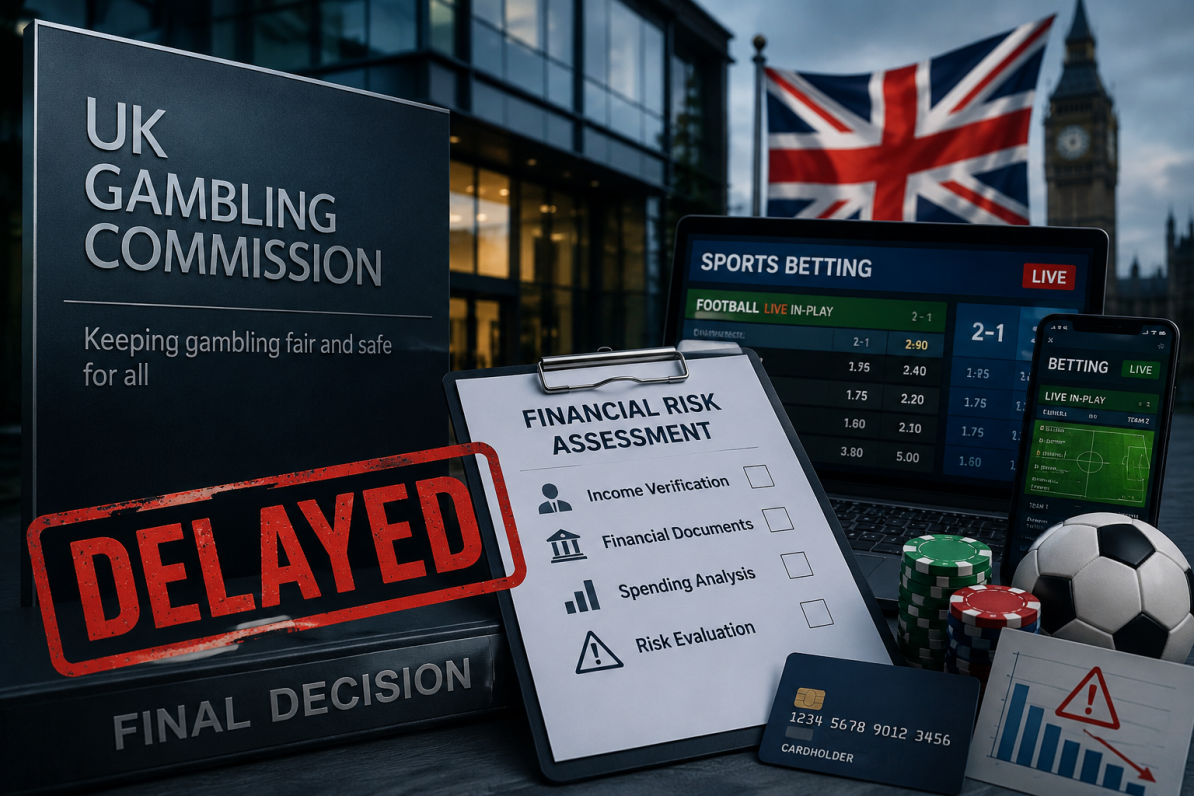
The UK Gambling Commission (UKGC) has postponed its final decision on introducing mandatory financial risk assessments for gamblers, extending uncertainty around one of the most debated reforms included in the UK’s 2023 Gambling Act white paper.
The announcement followed a UKGC board meeting held on May 21, where regulators reviewed evidence gathered during pilot testing and consultations with operators, industry groups, and policymakers. While the Commission acknowledged that extensive data had been reviewed, officials confirmed that the evaluation process is still ongoing.
A spokesperson for the regulator said the board had examined a substantial body of evidence but had not yet reached a final conclusion regarding the next steps for the proposed framework.
What Are Financial Risk Assessments?
Financial risk assessments (FRAs), commonly referred to by critics as “affordability checks,” are designed to help gambling operators identify signs of financial vulnerability and gambling-related harm among customers.
The measures form part of the broader modernization reforms proposed by the UK government in 2023, with the objective of improving consumer protection standards across online gambling.
According to the UKGC, the checks are not intended to cap or restrict how much individuals can spend. Instead, the system aims to detect potentially harmful gambling behavior early and allow operators to intervene when customers may be experiencing financial distress. Under the trial framework, assessments were triggered when a player deposited more than £1,000 within 24 hours or exceeded £2,000 in deposits over a rolling three‑month period.
However, concerns quickly emerged from both players and industry representatives after reports suggested that some users with lower spending levels were also asked to provide financial documentation to prove affordability.
Gambling Industry Raises Concerns
The proposed checks have faced strong resistance from sections of the gambling industry, with critics arguing that the measures could damage customer experience, reduce betting activity, and push players toward unregulated offshore platforms.
Just days before the UKGC board meeting, the Betting and Gaming Council (BGC) reportedly warned that it could launch legal action against the regulator if the affordability measures move forward in their current form. Industry stakeholders have repeatedly argued that the checks risk creating unnecessary friction for recreational bettors while offering limited evidence that they effectively reduce gambling harm. Horse racing representatives have also voiced concerns over the reforms.
A group of Members of Parliament recently sent a letter to Secretary of State for Culture, Media and Sport Lisa Nandy, warning that stricter affordability requirements could negatively affect racing revenues and encourage consumers to use black-market gambling operators.
Regulatory Debate Continues
The delay highlights the difficult balance regulators face between strengthening consumer protections and maintaining a competitive, regulated gambling market. Supporters of the proposed framework argue that financial vulnerability checks are necessary to reduce gambling-related harm and identify high-risk behavior before serious financial problems develop.
Opponents, however, believe the proposals could create privacy concerns and discourage customers from using licensed operators regulated by the UKGC. The debate has become one of the most closely watched issues within the UK gambling sector since the publication of the Gambling Act review.
No Timeline Confirmed
At this stage, the UKGC has not provided a timeline for when a final decision will be announced.
Operators, affiliates, and betting industry stakeholders are expected to continue monitoring developments closely as regulators determine whether the financial risk assessment model will be revised, delayed further, or implemented in a modified form.
The Commission is expected to provide additional updates once its review of the evidence base has been completed.
Readers can follow future regulatory updates directly through the UKGC website and official UK government announcements.
Published: 24. May 2026
Anything incorrect or missing?






.jpg)


