




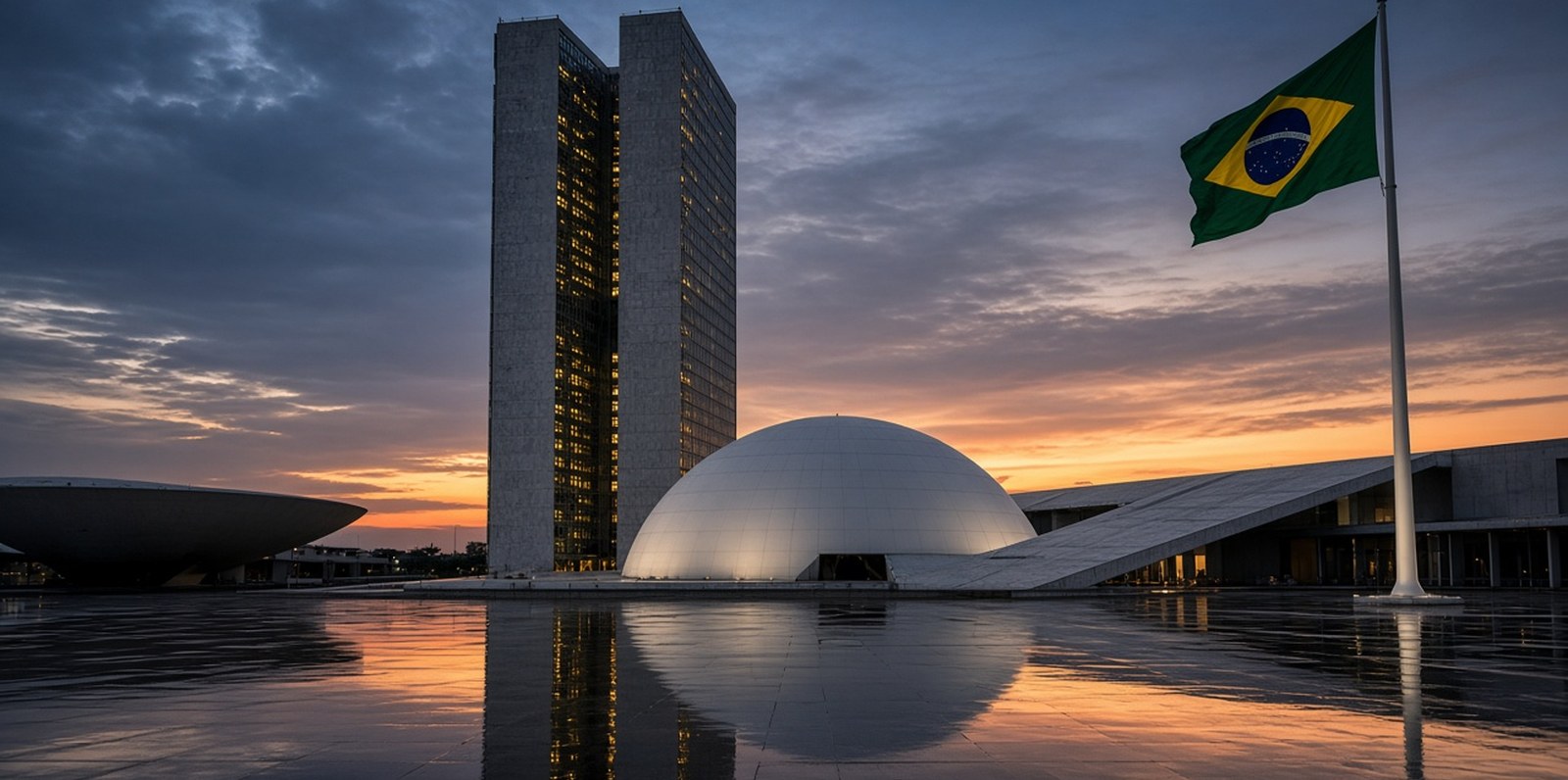
Brazil has taken licensed fixed-odds betting off the board. Provisional Measure 1.394, signed by President Luiz Inácio Lula da Silva and published on 25 September 2026, bans the running, offering, intermediation and advertising of quota-fixa lottery bets anywhere in the country. That includes a foreign operator that still serves a person who is in Brazil. It covers bets on real sports events and on virtual online games whose result comes from a random generator. Other lottery products that already have their own statute are left standing.
The text is on Planalto. A Ministry of Finance explainer, last updated 7 October, sets the player timetable. New money into betting wallets stopped on publication day. Players could ask for a voluntary payout until 23:59 on 5 October. From 6 October the sites and apps had to be unreachable. Authorisations granted under Law 14.790 of 29 December 2023 end 30 days after publication, which is 25 October 2026. There is no refund of the licence grant and no public indemnity. The measure is not a statute yet.
What went dark, and what still has to be paid back
The ban is not only a sportsbook story. Article 1 of the measure reaches virtual online games: an electronic channel where the result of a future random event is unknown when the bet is placed. That is the legal box Brazilian licensed operators used for online casino products, including slots. State and Federal District concessions for the same product are extinguished on the same 30-day clock. New licences are forbidden. Applications that were still pending on 25 September die with the measure.
Open bets whose result had not been settled by the ten-day cutoff are void. The player is supposed to get the full stake back, with no deductions. Prizes on bets that had already been settled by that cutoff still have to be paid. After the sites went dark, operators had two days to send banks and payment firms a list of each player by CPF, the amount due, and the account the money came from. Those firms then had seven days to send it back, preferably to the original account. From 15 October, Caixa Econômica Federal is the fallback when a bank cannot complete a return. An operator that misses the two-day data duty faces a daily fine of R$200,000 until it complies.
Payment firms, including those in Brazil's instant-payment arrangement, may not process, settle or enable transfers for these bets except what is needed to shut the books and return balances. The Central Bank is supposed to write the operating rule, including a way to reject and reverse those transfers. That is the rail this site covers on the PIX page. If a PIX deposit to a betting wallet still goes through after the cutoff, that is a breach of the measure, not a loophole in it.
Advertising, blocks, and one court that lasted a day
From publication, advertising, marketing and sponsorship of these bets are banned in any medium aimed at the Brazilian public. Existing physical and digital ads had ten days to come down. Older editorial content that only carried a betting ad as an accessory is carved out. Internet services have a duty of care to stop that promotion. App stores and operating systems are told not to keep offering the banned product. The Finance and Justice ministries can ask for site blocks. Anatel passes those orders to connectivity providers. CGI.br handles .br name resolution.
Stake Brazil Ltda. tried to stay up. On 8 October the 9th Federal Civil Court in São Paulo refused to keep the company's authorisation alive until 31 December 2029, which is what Stake had asked for. The same judge, Cristiane Farias Rodrigues dos Santos, granted a narrower hold until 25 October, limited to the original SPA/MF ordinance. The next day the president of the Federal Regional Court of the 3rd Region, Luis Antonio Johonsom di Salvo, suspended that hold on a request from the Union. The TRF-3 filing is here. That decision does not rule on whether the measure is constitutional. It stops one operator from sitting outside a ban that already applied to the rest of the market. G1 reported the same sequence on 9 October.
Congress still has the last word
A medida provisória has the force of law when it is published. It is not a finished statute. The National Congress page for MPV 1394/2026 gives a deliberation window from 25 September to 23 November 2026. Ninety-nine amendments were filed by 13 October. A joint committee has to report before either house votes. Urgency that blocks the agenda is marked from 9 November, the 46th day. If Congress does not convert the measure, it lapses. Until then, the ban, the site shutdown and the 25 October licence cut are the operating facts.
Law 14.790, the 2023 statute that opened this market, is largely repealed going forward. Duties that arose while the licences were live, including supervision by the Secretariat of Prizes and Bets, stay for past facts. Operators still have to keep records for at least five years. An inter-agency committee, chaired by the Civil House, is supposed to coordinate enforcement against illegal offer and ads.
This site does not have a Brazil casino list. Rooms that still take other countries are on the main casino list. If you are choosing a room that is actually allowed to take you, the order in how to choose an online casino in 2026 still starts with the licence and the country, not the banner. A slots lobby on an unlicensed site aimed at Brazil is the product this measure is trying to switch off. Finland is moving the other way, toward a licensed market in 2027, which is the story in Wildz and the Finnish licence letter.
If you still have a Brazilian betting balance after the voluntary window, the Finance Ministry's path is the bank return, then Caixa. Do not treat an offshore mirror as a way around a ban that names foreign operators on purpose. Gamble only with money you can afford to lose, and only where the operator is allowed to take you.
Sources: MP 1.394/2026; Ministry of Finance explainer; Congress MPV 1394; TRF-3 suspension; G1, 9 October 2026.
Published: 20. October 2026
Anything incorrect or missing?